
SCHMIDT & TUMMELEY FOR JUIST POTTERY
CONTACT US HERE ABOUT THIS ITEM.
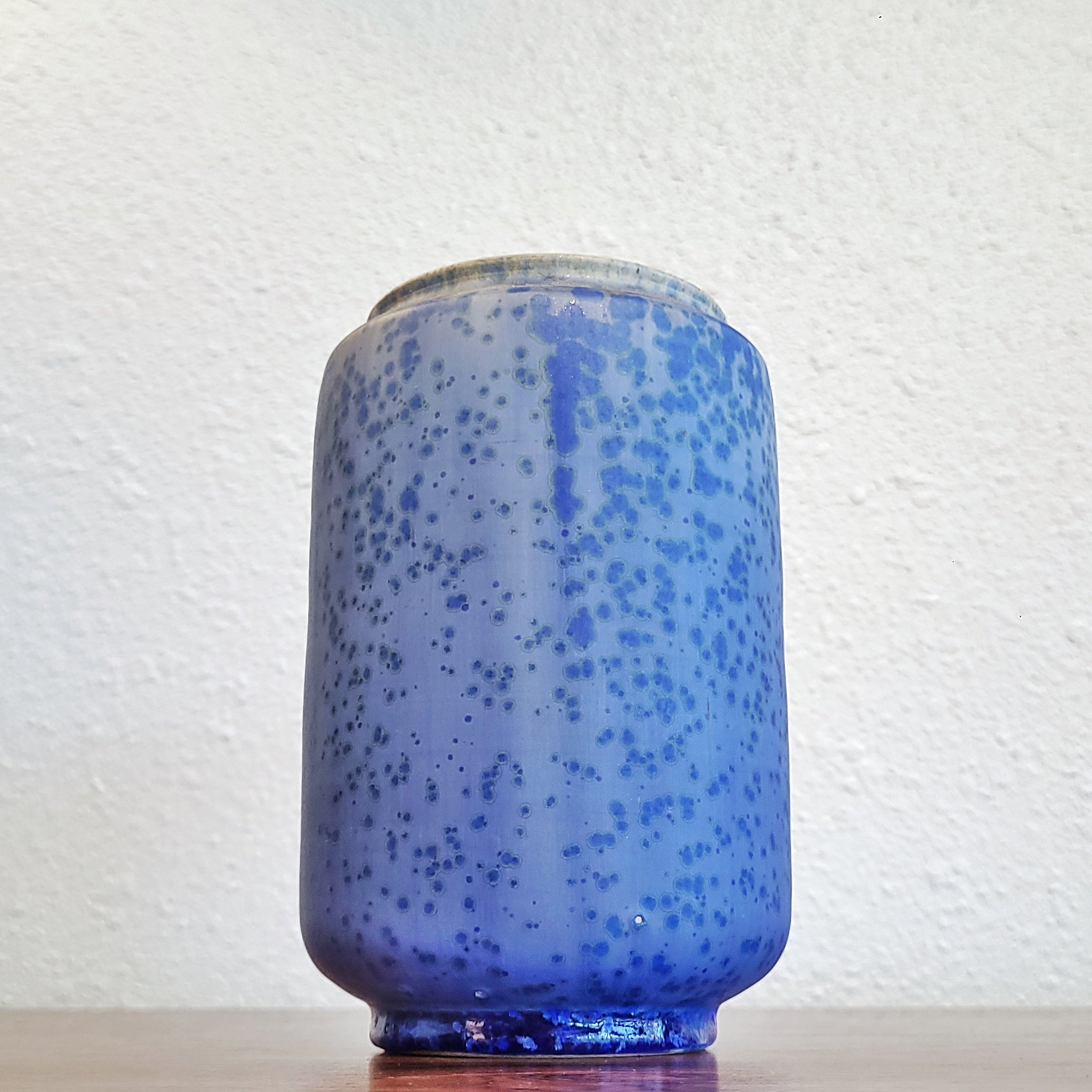
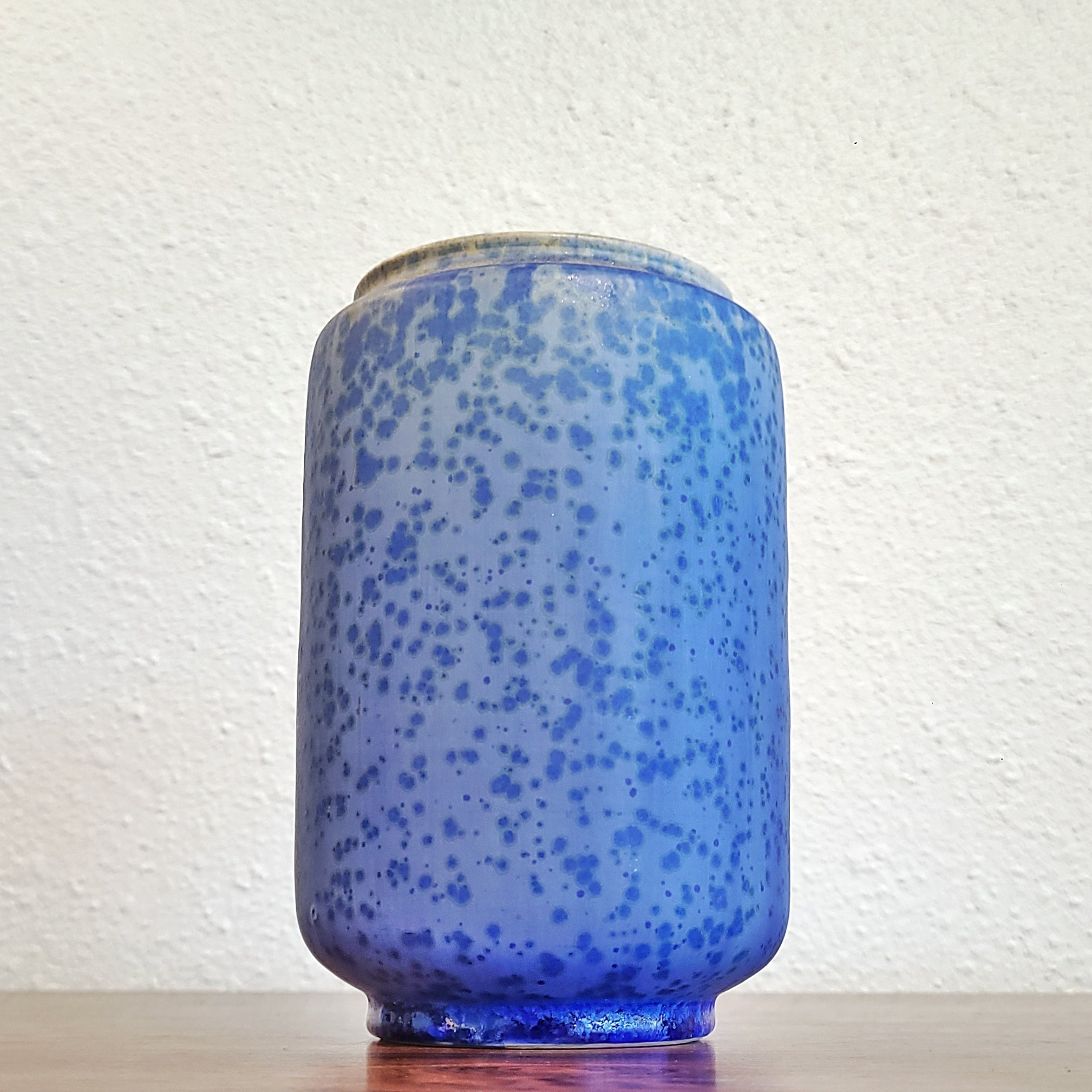
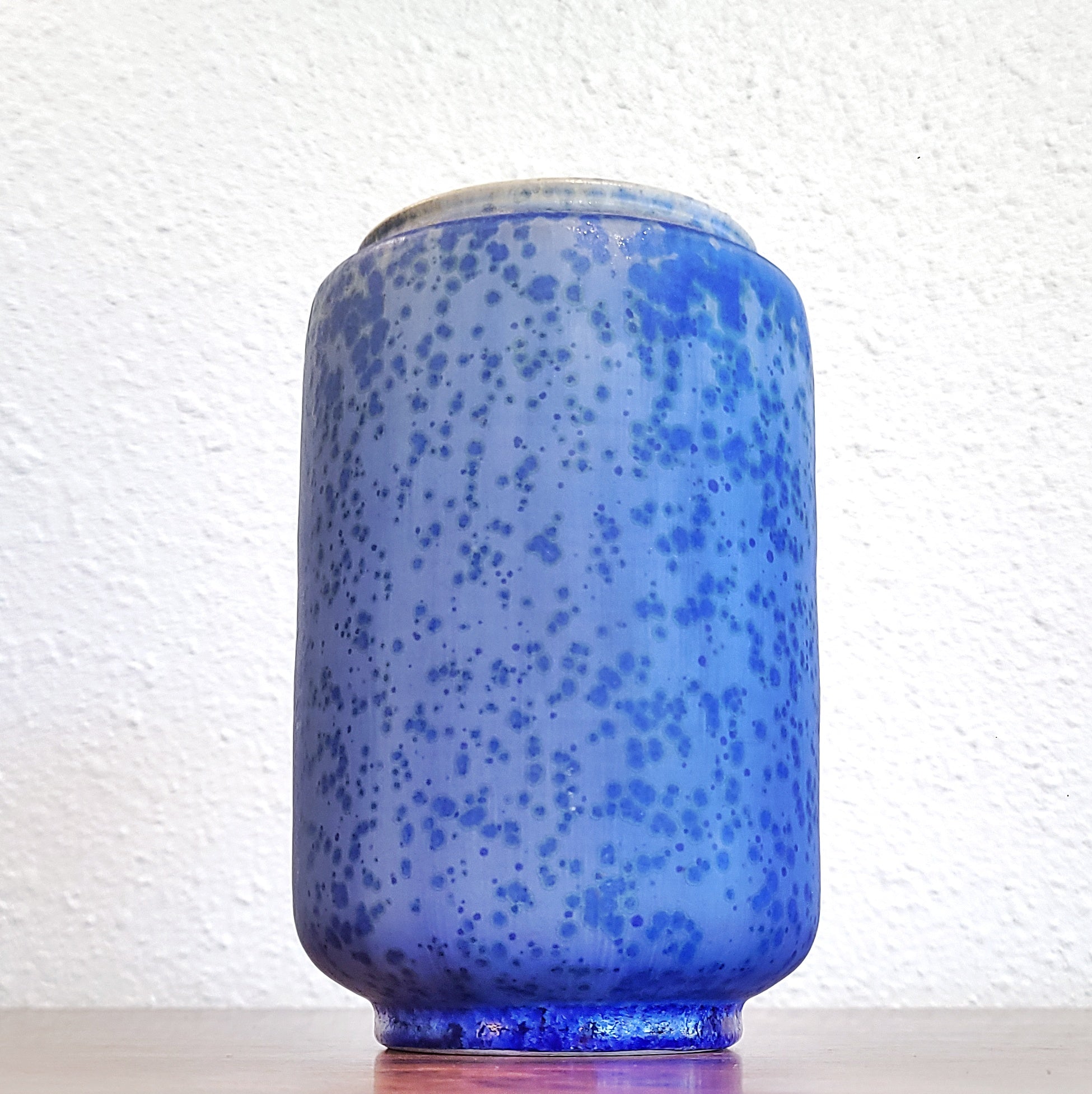
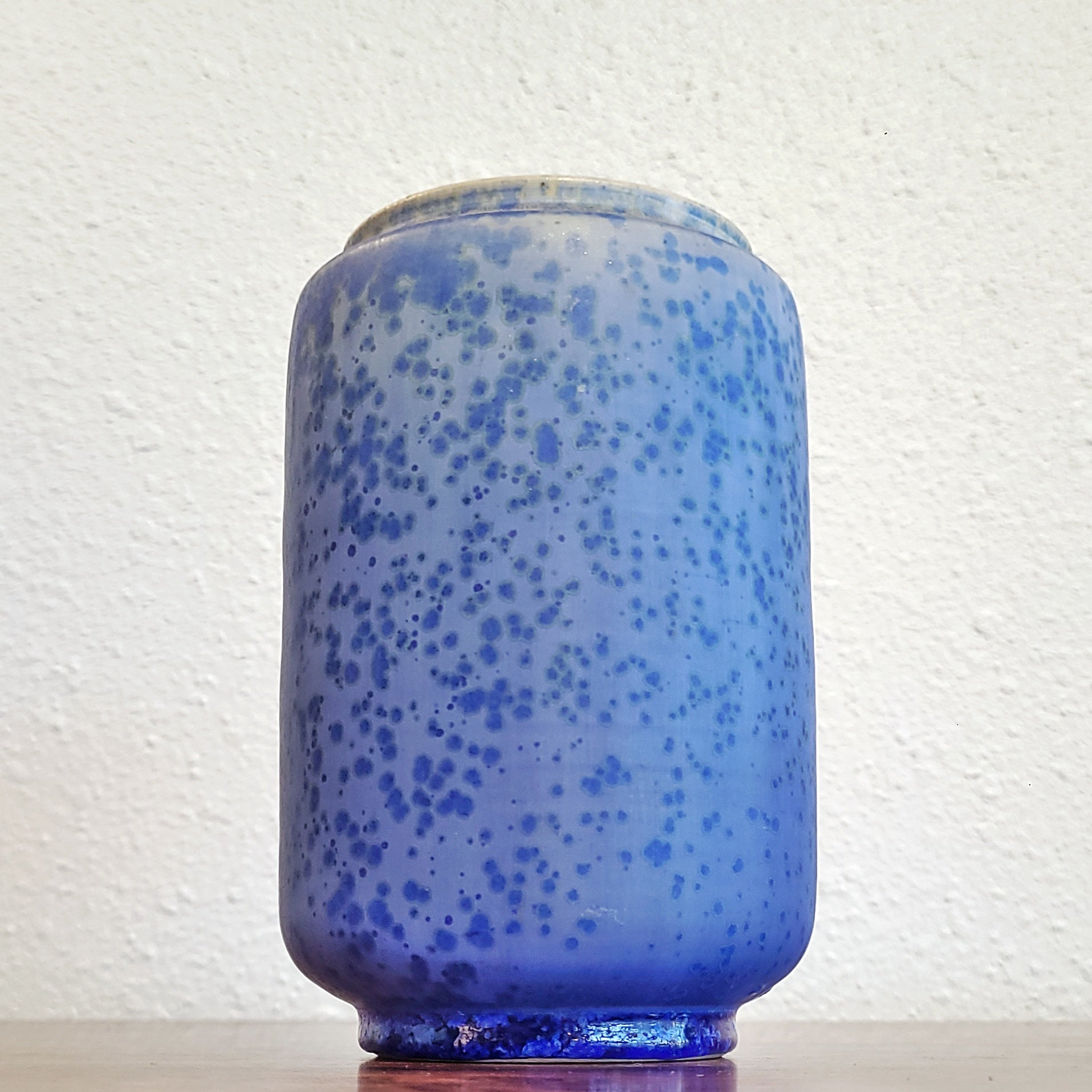
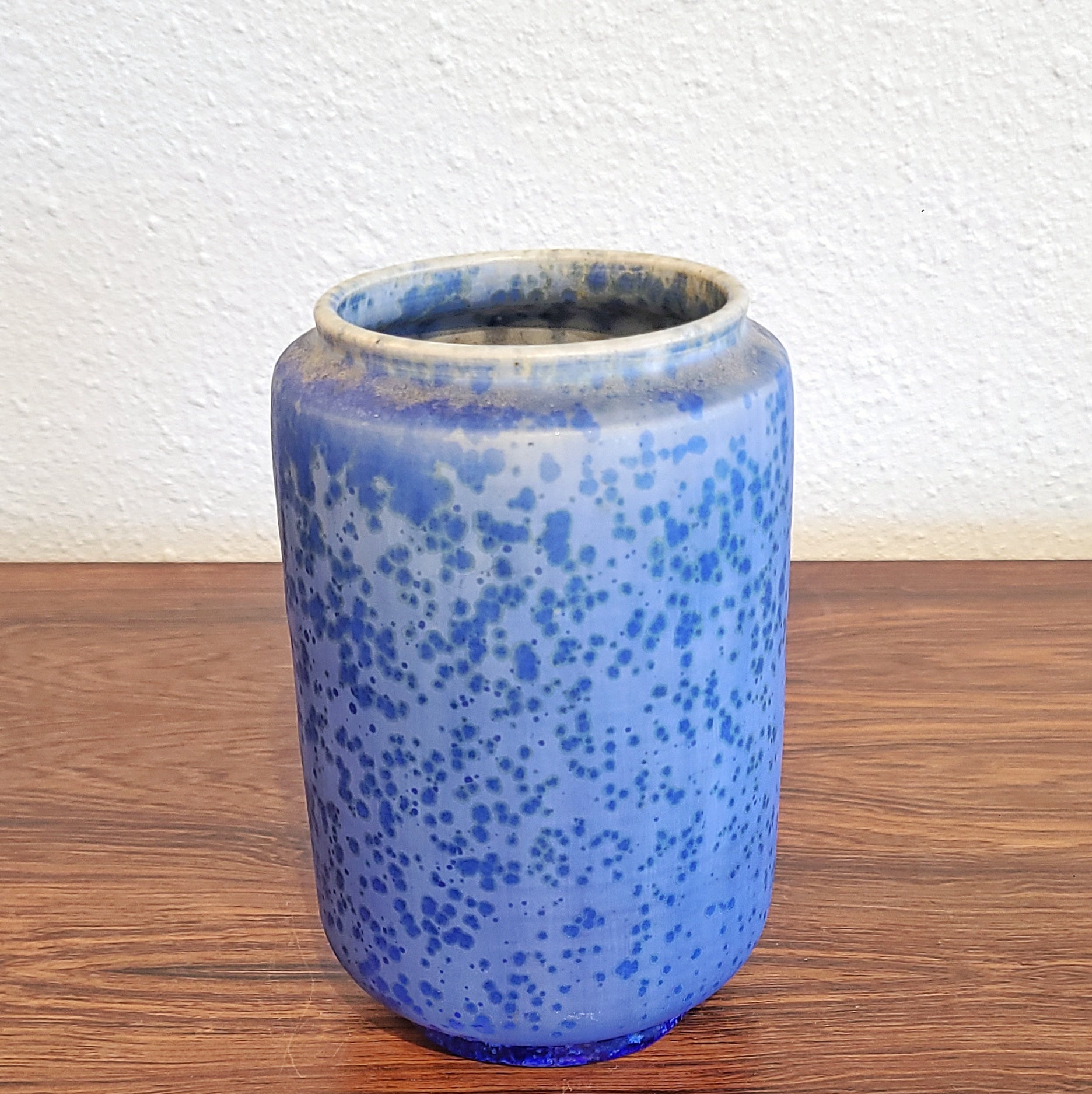
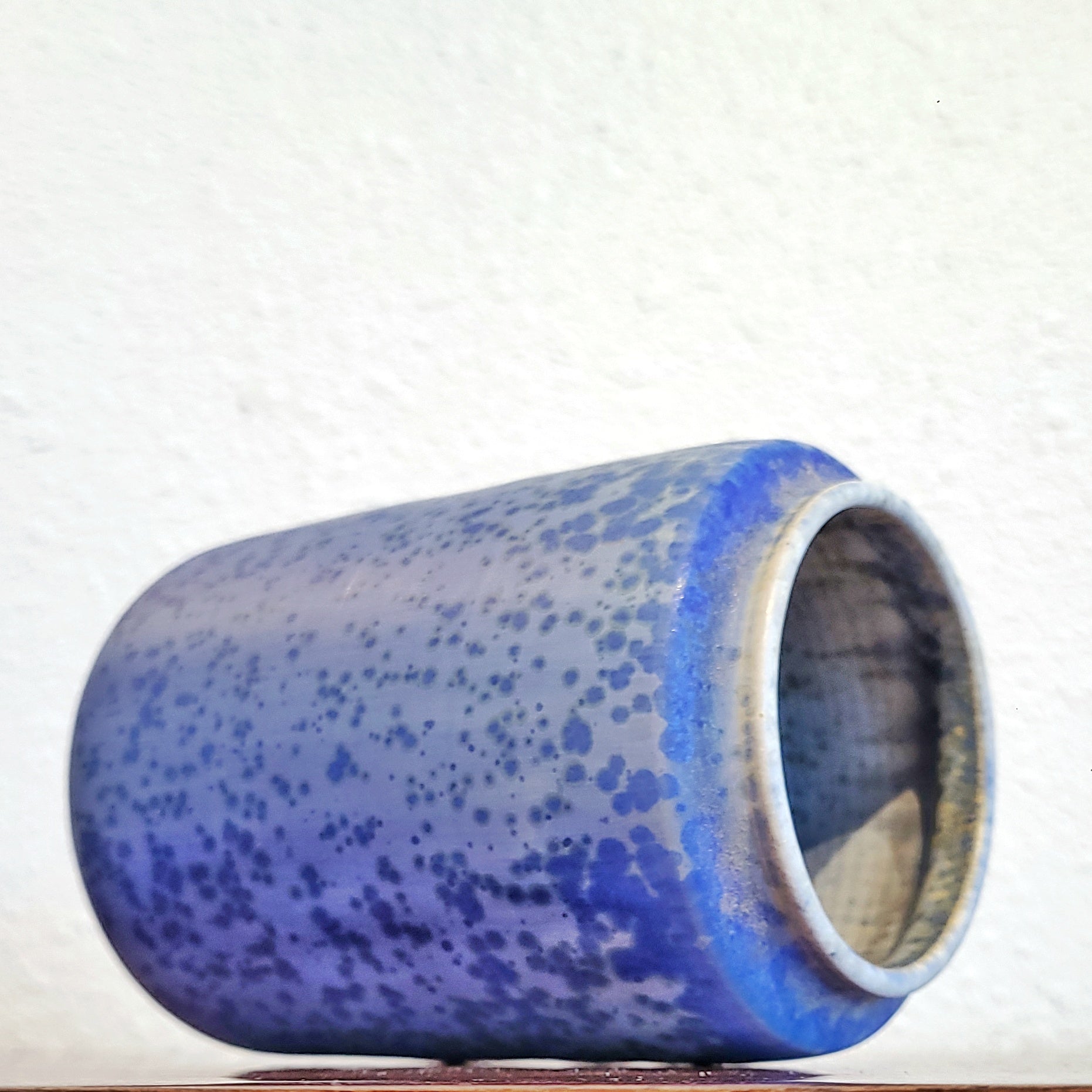
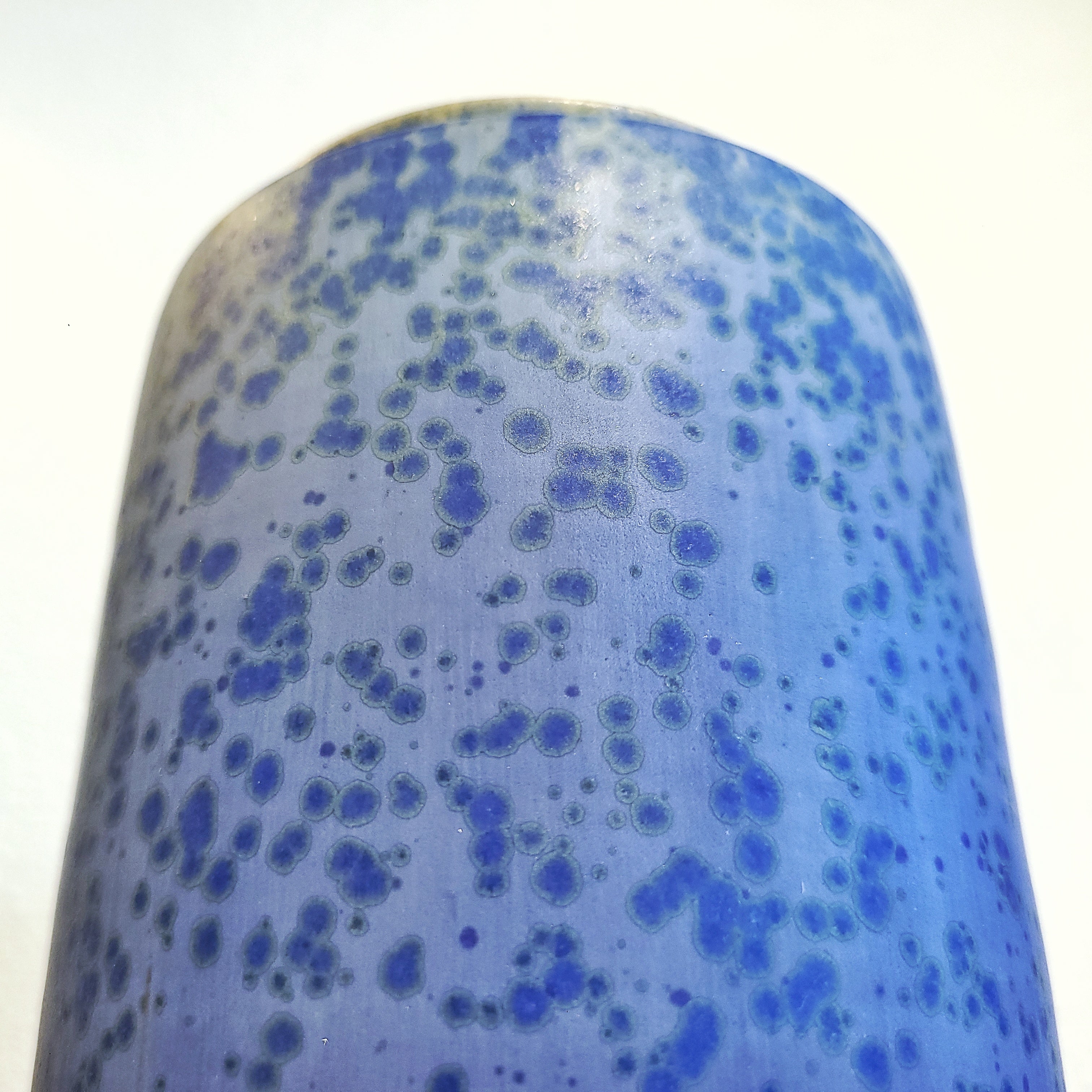
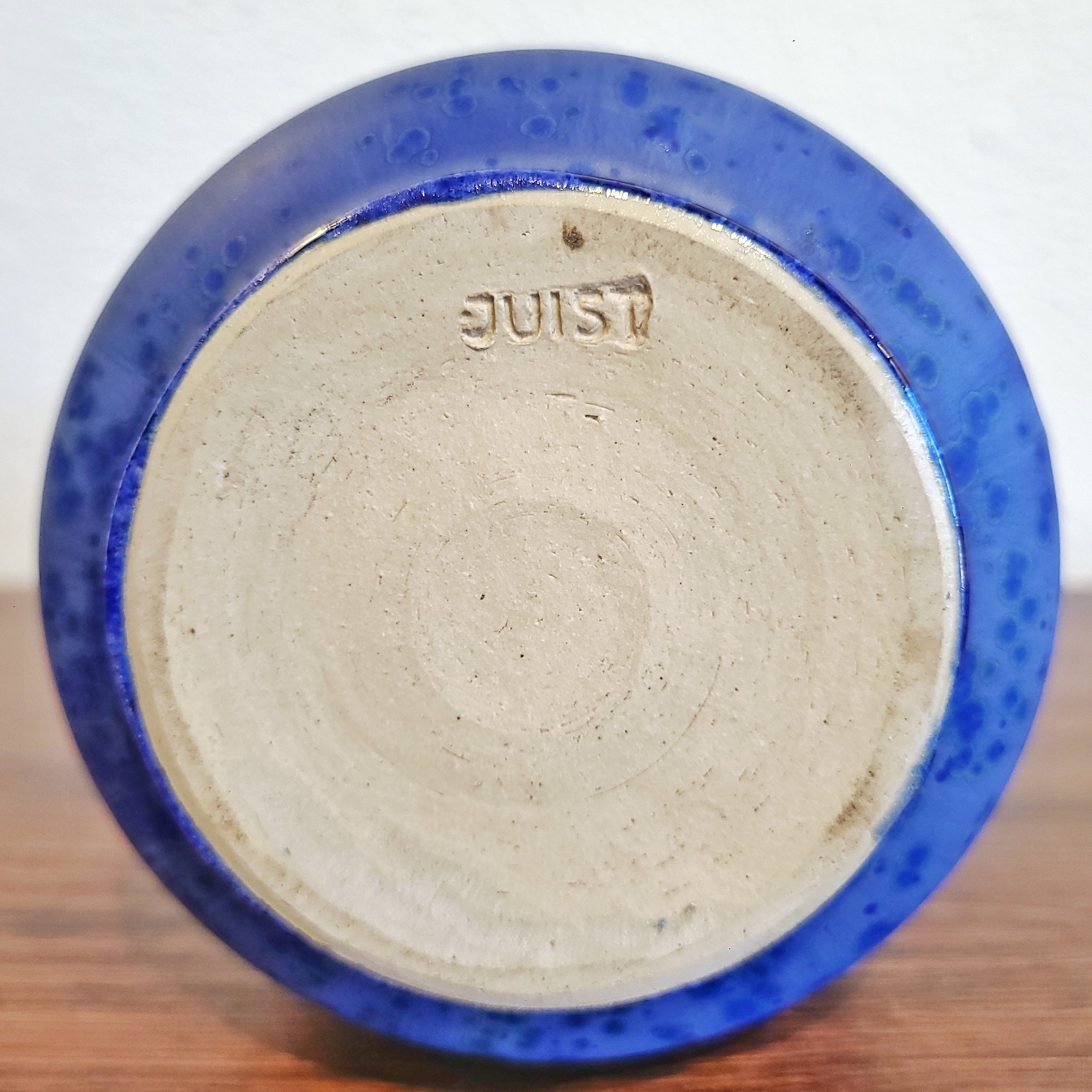
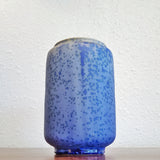
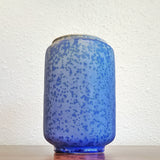
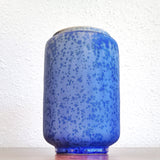
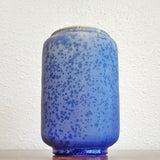
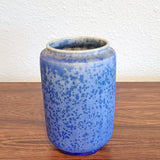
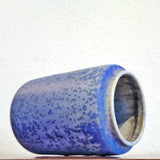
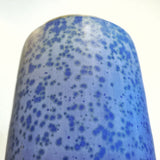
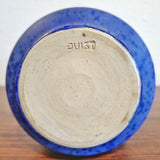
A beautiful blue and violet cylinder vase with hints of greenish-yellow halos around scattered blue crystalline speckles. It was created in the 1960s on the small North Sea Barrier island of Juist by Annemarie Schmidt and Werner Tummeley.
JUIST KERAMIK was the informal business name for an influential studio pottery established in 1948 by German potters Annemarie Schmidt (b. 1919) and Werner Tummeley (1920–1996). Juist, a remote and narrow German North Sea barrier island, was the home of a children’s sanatorium, Der Weberhof, the Weaver’s Farm. Annemarie and Werner were born in Cologne and Treis, respectively, and met while training at the ceramics factory in Höhr-Grenzhausen. While there, they were approached by Stephan and Urban Thiersch (?–?; 1916–1984), the sons of the architect Paul Thiersch (1879–1928), the founder of the well-known Burg Giebichenstein School of Applied Arts in Halle, whose curriculum was based on the Bauhaus model. They intended to find a pair of potters to help them create a workshop community of artists on Juist. Before the war, they had established a weaving mill there for the therapeutic and financial benefit of the children and were seeking to do the same with a pottery. A supplemental goal was to provide an opportunity for young, enthusiastic artisans, and so it was that in 1947 Schmidt and Tummeley came from Höhr-Grenzhausen to join the other artists on the small island.
The end of the war, with its tremendous upheavals in all areas of life, was seen by the group who started building the Weberhof workshops in 1946 as a great chance to create a special kind of living and working community. This community aimed not only for joint artistic expression but also to find answers to the vital questions of coping with existence after the total collapse of the state and social order. With the help of diverse relationships and contacts, the company gradually succeeded in procuring important equipment for the Weberhof workshops, such as ceramic and enamel kilns, pottery wheels, workbenches, and much more, often using hoarded weaving stocks from the war period as a medium of exchange, since it was not until 1948, after the currency reform on June 20, that cash could be used again. With much determination, the couple was able to establish the pottery workshop at the Weberhof in 1948, but in the following year, Annemarie and Werner decided to continue their own work independently of the Weberhof. The couple started their own workshop on Juist in 1949 and were married on Christmas Day of the same year.
From the start, the focus of their workshop was on vessel ceramics. Werner took care of the glazes and the technical process; Annemarie took care of the molds, the employees, and sales. Demand determined which glazes would be pursued and made available for sale. In 1953, Annemarie passed her master craftsman examination. In the following years, the couple produced small batches of objects as well as many unique items. Even during the boom years for German pottery, the workshop on Juist Island remained as it was, mostly due to spatial limits, but the demand for and popularity of their work remained strong. Nothing was ever mass-produced—even during the high demand years for West German Pottery, they maintained a strict adherence to studio principles, which is a major reason their work is so highly prized today for its individual craftsmanship. In addition to participating in several domestic and international exhibitions, the couple went to the Frankfurt trade fair every winter, and over the years, there was usually work for two apprentices and a year-round journeyman. In summer, there was often an intern. In 1963, Werner began experimenting with crystalline glazes. These glazes, often in blue and violet hues, created unique speckled patterns that became a signature look for the studio. A significant recognition of their work was the award of the Lower Saxony State Prize for Handicrafts at the end of the 1960s.
By the time of Werner’s death, the boom was over. In 2009, Annemarie Schmidt handed over the fate of the pottery to the next generation. The couple had two daughters who both became ceramicists. While Andrea moved south and ran a pottery workshop in Bielefeld, Nele stayed on Juist and took over the Inseltopferei (island pottery), which long ago had become part of the fabric of Juist. Nevertheless, Annemarie continued her work there as long as possible, and at the age of 96, she was still hand-painting ceramics. As of her 100th birthday in 2019, she still lived at the property.
DETAILS
Designer – SCHMIDT & TUMMELEY
Design Period/Year – 1960s
Maker – JUIST KERAMIK
Production Period/Year – 1960s
Origin – GERMANY
Styles/Movements – ABSTRACT; BAUHAUS; MID-CENTURY MODERN
Materials – CERAMIC
Colors – BLUE
Condition – Excellent vintage condition. May show minor signs of previous ownership and use.
Dimensions – 4" DIAM. × 6 ½" H